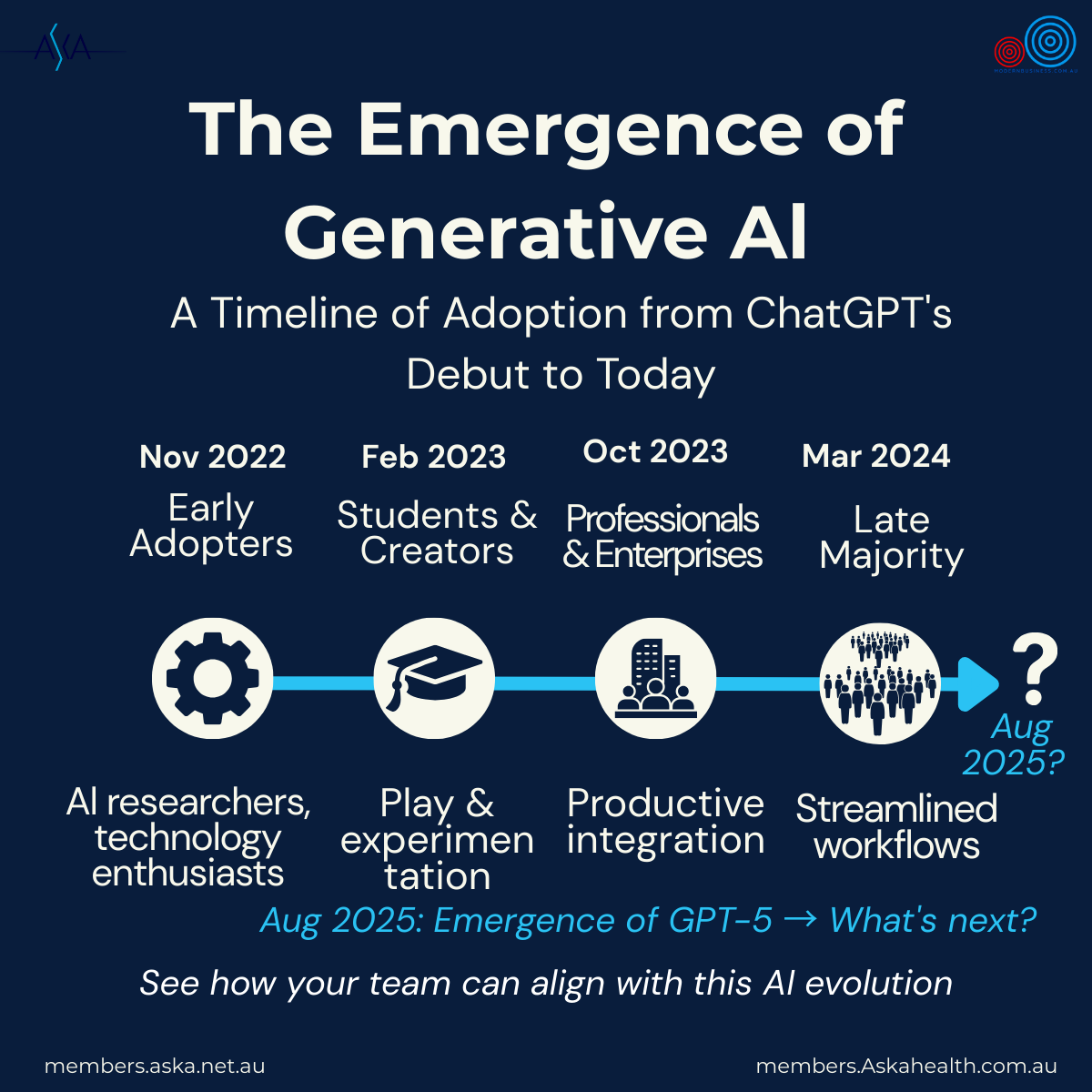
The Quiet Revolution: Why October 2023 Was the Real Turning Point for AI
Introduction
When OpenAI released the first version of ChatGPT in November 2022, it made headlines across the world. Within days, over a million people were using the chatbot to write stories, solve problems, and draft emails. For many, this was the moment AI had finally “arrived.”
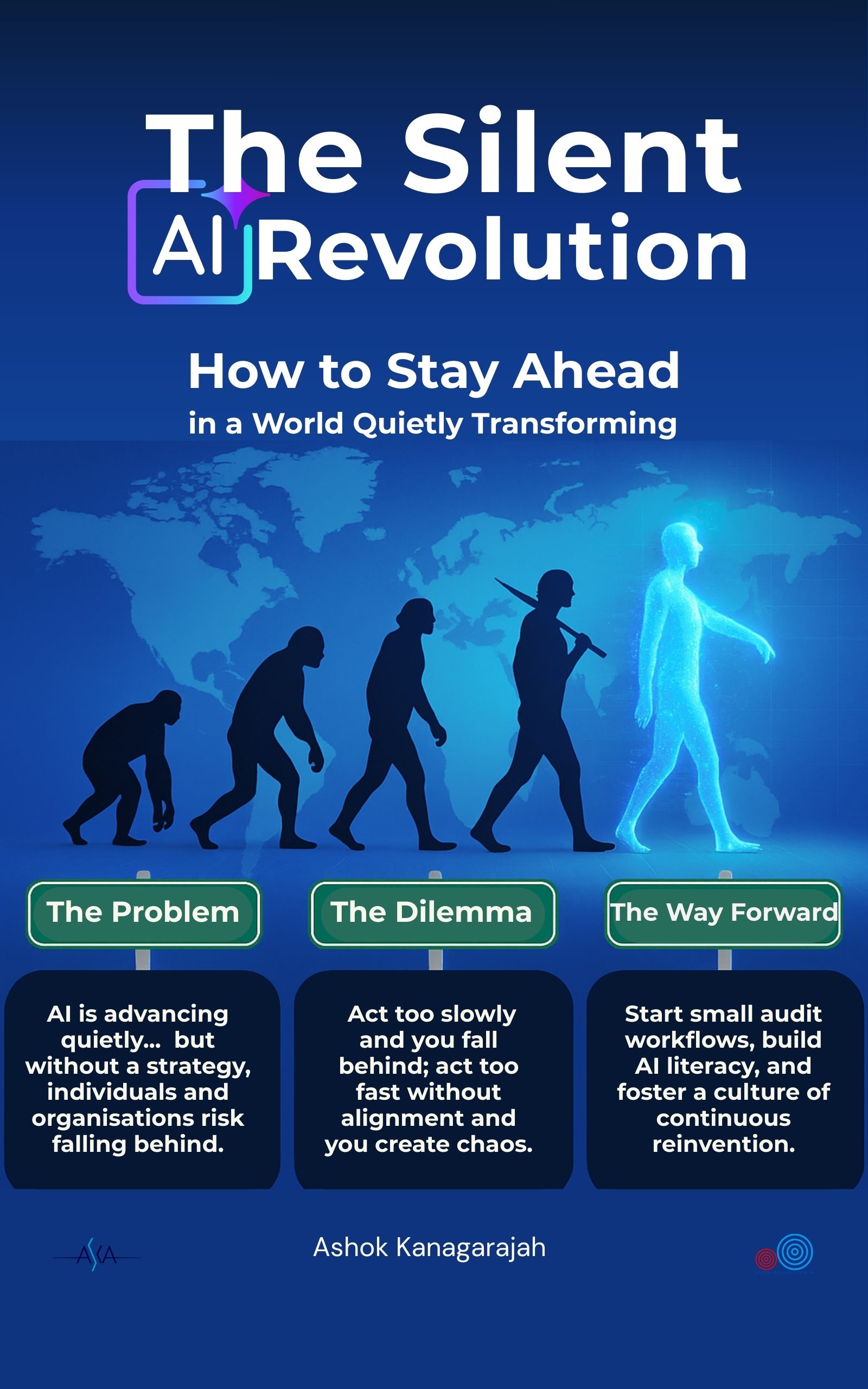
So why do we suggest that October 2023 — nearly a year later — may be remembered as the real turning point? We explore this idea in more depth in The Silent AI Revolution and our companion strategy blog.
To answer that, we need to trace ChatGPT’s journey more carefully.
1. From Research to Reality: A Quick Recap
- GPT-1 (2018): The research foundation — basic language learning
- GPT-2 (2019): Coherent paragraphs, withheld at first due to potential misuse
- GPT-3 (2020): Public awareness spikes — AI that sounds almost human
- ChatGPT (Nov 2022): Mass adoption begins — 1M users in 5 days
- GPT-4 (Mar 2023): Smarter, more accurate, but still gated behind subscriptions
By early 2023, students, writers, and tech-savvy professionals had already started to integrate AI into daily learning and creative tasks. But it still required experimentation, workarounds, or tech confidence.
2. October 2023: The Mainstreaming Moment
In October 2023, OpenAI released a major update to ChatGPT (called GPT-4 Turbo) that quietly redefined the user experience:
- Custom GPTs — Anyone could now create their own AI assistant, no coding required
- Tool integration — Image generation, browsing, and data analysis rolled into one platform
- Memory — ChatGPT could now remember your preferences, work style, and goals
- User interface overhaul — A smoother, unified experience across tasks
This update made high-powered AI not just available, but truly usable — even for non-technical users.
It’s the difference between having access to an engine… and being handed a car.
3. Why It Matters More Than November 2022
While November 2022 sparked awareness, October 2023 marked a capability shift:
- AI became personalized, composable, and integrated
- Professionals began embedding AI into workflows, not just experimenting
- Enterprise adoption accelerated as tools matured, and trust increased
This was the moment where the early adopter phase evolved. Students had already embraced AI for learning in early 2023, but by October, teams and leaders began seeing it as a core productivity partner — not a novelty.
4. What This Means Going Forward
You may not remember where you were when GPT-4 Turbo launched — and that’s the point. Real revolutions often happen quietly.
October 2023 didn’t feel dramatic. But in hindsight, it’s the point where:
- Study habits shifted from Googling to prompting
- Professionals began co-creating with AI, not just asking it questions
- Communication, creativity, and decision-making quietly evolved
And most importantly, it signalled that the future of work, education, and leadership would be co-piloted, not replaced.
Final Thought
So while the world took notice in November 2022, the real shift — the moment AI became personal, integrated, and foundational — happened nearly a year later.
That’s why we call October 2023 the turning point.
Curious where your business stands in the AI shift?
Whether you’re leading a small team or scaling an enterprise, staying aligned in an AI-driven world is essential.
Stay Ahead of the Curve. Get the Guide.